AI Vision Systems Explained: How They Work and What to Look For
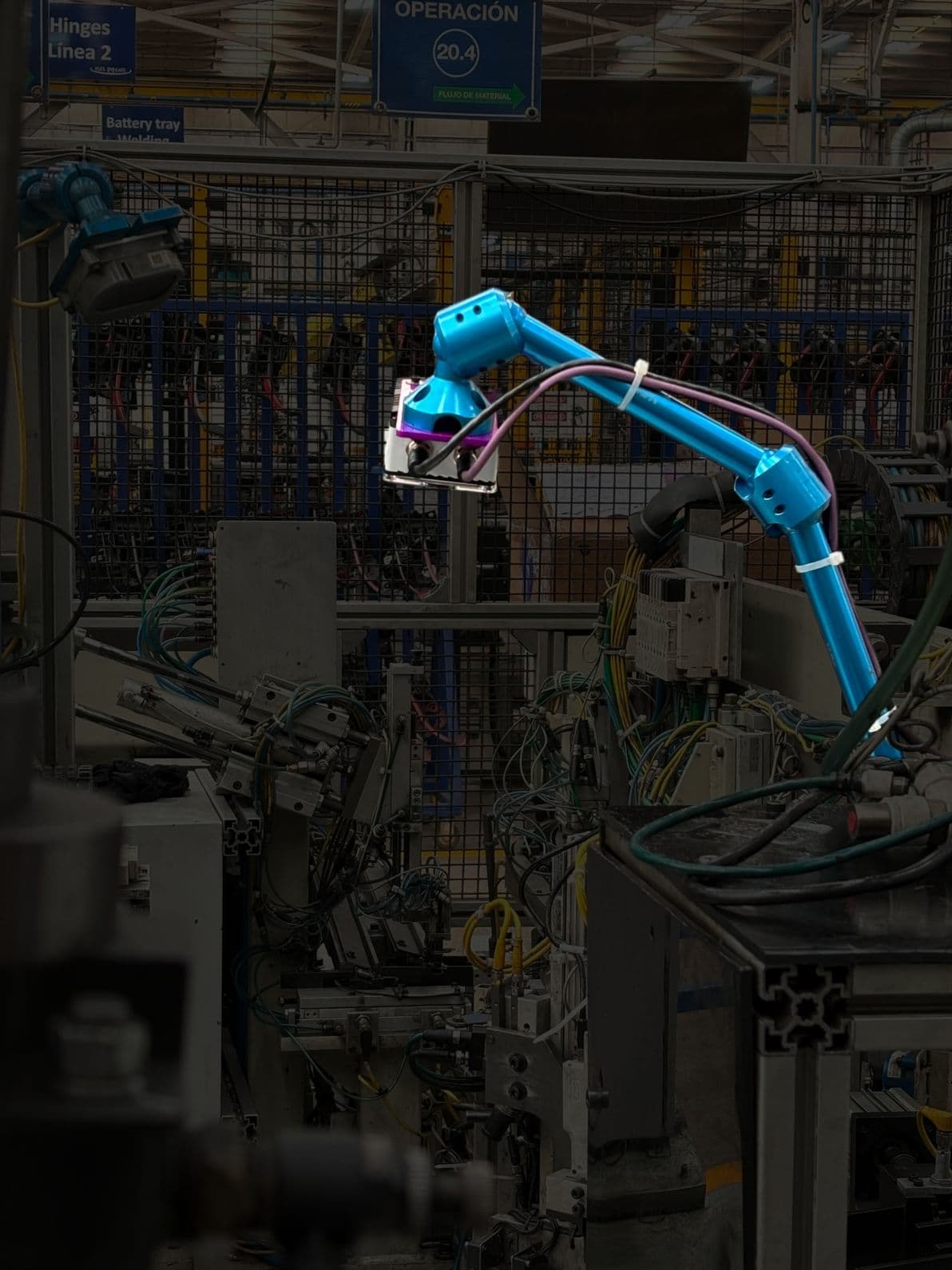
AI vision systems represent the next evolution of industrial machine vision, combining high-resolution imaging with deep learning algorithms to perform inspections that were previously impossible. Unlike traditional vision systems that rely on hand-programmed rules, AI vision systems learn from examples, enabling them to handle real-world complexity and variation.
For manufacturers evaluating vision system AI technology, understanding how these systems work and what differentiates good solutions from great ones is essential for making the right investment.
What Makes a Vision System "AI-Powered"?
The term "AI vision system" specifically refers to systems that use machine learning, typically deep learning neural networks, to analyze images. This is fundamentally different from traditional machine vision:
Traditional Machine Vision
- • Rules programmed by engineers
- • "If pixel value > threshold, then..."
- • Struggles with variation
- • Requires expert programming
- • Difficult to modify
AI Vision Systems
- • Learns from example images
- • Neural networks recognize patterns
- • Handles natural variation
- • Non-programmers can train
- • Adapts with new data
Core Components of an AI Vision System
1. Industrial Camera
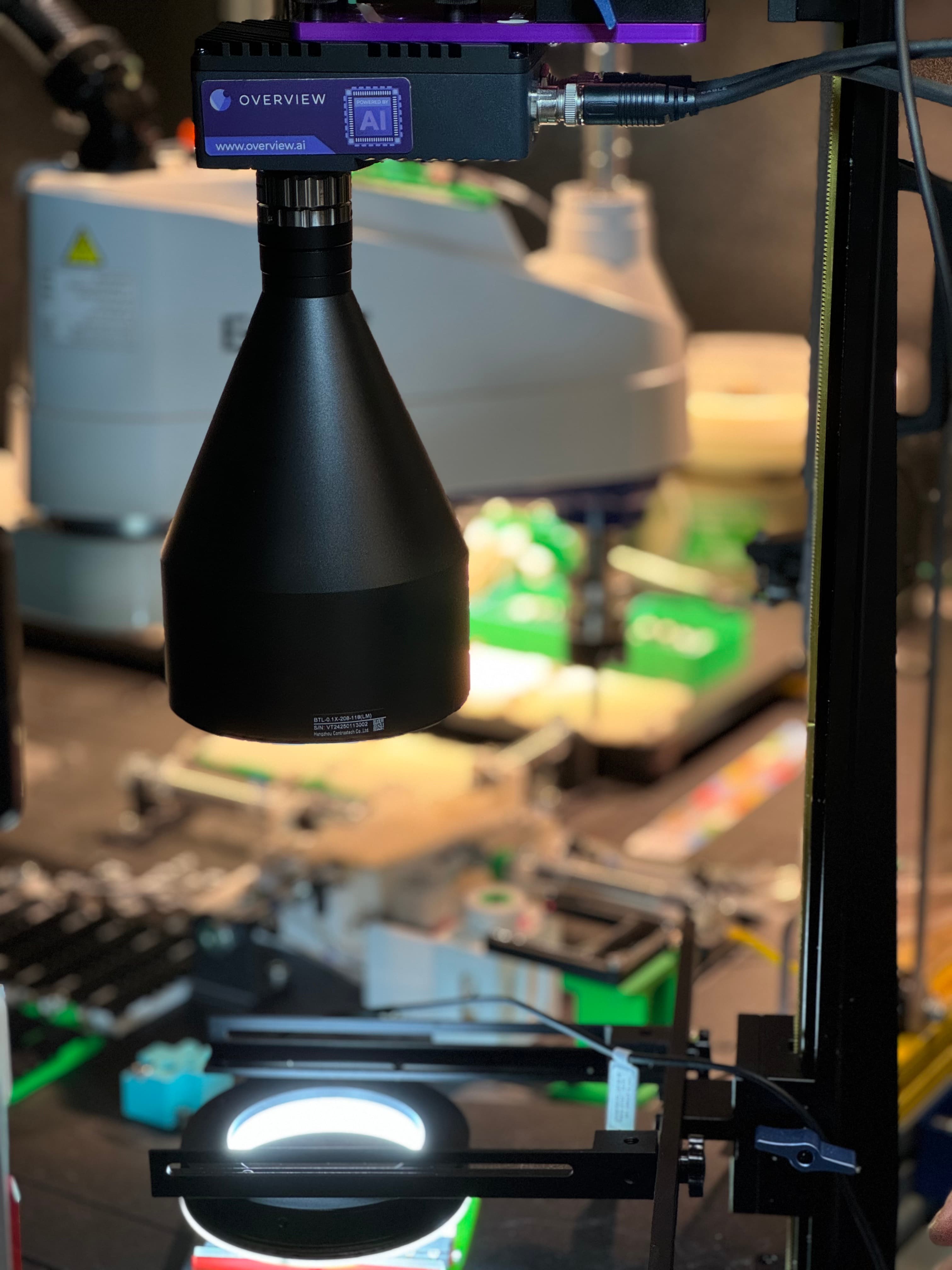
The camera captures images that feed into the AI algorithms. Industrial AI vision systems typically use global shutter sensors to avoid motion blur, resolutions from 2MP to 20MP+ depending on detail requirements, and frame rates from 30 to 200+ FPS for high-speed applications.
2. Optimized Lighting
Lighting is often the most critical element. Even the best AI cannot detect defects that aren't visible in the image. Common techniques include ring lights for uniform illumination, backlighting for silhouettes and dimensional checks, dome lighting for reducing glare on reflective surfaces, and structured light for 3D applications.
3. Edge Computing Hardware
AI inference requires significant computational power. Modern AI vision systems use NVIDIA GPUs or similar accelerators to run neural network models in real-time. "Edge" processing means all computation happens locally on the factory floor, with no cloud connection required. Learn more about edge computing for manufacturing.
4. AI Software Platform
The software orchestrates everything: image capture, AI inference, result visualization, model training, and integration with factory systems. The best platforms make it easy for non-experts to train and deploy models.
How AI Vision Systems Learn
Training an AI vision system involves showing it examples of what to look for. The basic process includes:
- Collect Training Images: Capture images of good parts and defective parts
- Label the Data: Mark which images are good, which have defects, and where defects are located
- Train the Model: The AI learns patterns that distinguish good from bad
- Validate Performance: Test the model on new images it hasn't seen
- Deploy to Production: Run the trained model on the factory floor
- Continuous Improvement: Add new examples to improve accuracy over time
Modern AI vision platforms have dramatically reduced the amount of training data required. While early systems needed thousands of images, today's best solutions can achieve production-ready accuracy with as few as 5-20 example images per defect type.
Key Capabilities to Evaluate
When evaluating AI vision systems, look for:
- Classification: Sorting parts into categories (good, defect type A, defect type B)
- Object Detection: Finding and locating specific objects within an image
- Segmentation: Pixel-level analysis for precise defect boundaries
- Anomaly Detection: Finding unusual patterns without explicit defect training
- OCR/Barcode Reading: Extracting text and codes from images
- Measurement: Dimensional analysis with sub-pixel accuracy
What to Look For in an AI Vision System
Ease of Training
The biggest differentiator between AI vision platforms is how easy they make model training. Look for systems where quality engineers (not data scientists) can train accurate models in hours, not weeks. Browser-based interfaces, guided workflows, and minimal coding requirements are signs of a well-designed platform.
Integration Simplicity
Getting a vision system to communicate with PLCs, robots, and factory networks shouldn't require a systems integration project. Support for standard industrial protocols (EtherNet/IP, PROFINET, Modbus) and simple digital I/O connections streamlines deployment.

Industrial Reliability
Factory environments are harsh: dust, vibration, temperature swings, and electromagnetic interference. AI vision systems need industrial-grade construction, not consumer electronics. Look for IP65+ ratings, wide temperature ranges, and fanless designs where possible.
Vendor Support
AI vision technology is evolving rapidly. Choose a vendor who provides ongoing support, training resources, and system updates. The relationship shouldn't end at purchase; it should be a partnership for continuous improvement.
Common Applications
Surface Inspection
Detect scratches, dents, stains, and texture anomalies on any surface type.
Assembly Verification
Confirm components are present, correctly positioned, and properly oriented.
Weld Inspection
Find weld defects including porosity, cracks, spatter, and incomplete fusion.
Label Verification
Verify text, barcodes, and graphics are correct and legible.
Integrated vs. Component Systems
AI vision systems come in two main architectures:
Component systems require you to separately source and integrate cameras, lighting, computing hardware, and software. This offers maximum flexibility but demands significant integration expertise and time.
Integrated systems combine all components into a single, pre-configured package. You sacrifice some flexibility for dramatically faster deployment and simpler operation. For most manufacturing applications, integrated systems deliver better outcomes.
Companies like Overview.ai pioneered the integrated approach, offering complete AI vision systems that arrive ready to deploy. This eliminates the weeks or months typically spent on systems integration.
Questions to Ask Vendors
- How many training images are typically required? Fewer is better. Modern systems should need 5-20, not hundreds.
- Who can train models? Quality engineers should be able to train, not just data scientists.
- What's the typical deployment time? Days to weeks is reasonable; months is a red flag.
- How does the system handle variation? Ask for examples of performance with real-world product variation.
- What support is included? Understand what help is available after purchase.
- Can I see reference customers? Talk to actual users in similar applications.
Ready to Explore AI Vision Systems?
See how modern AI vision technology can solve your inspection challenges with a hands-on demonstration.
Schedule a Demo